


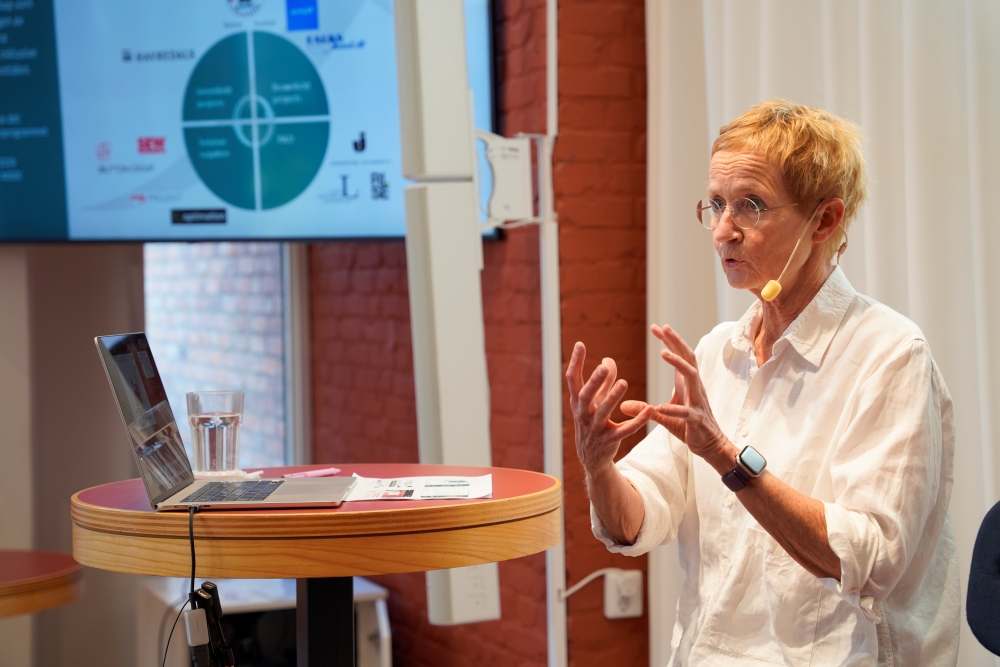
Professor Kristina Säfsten believes that Polarbröd's reconstruction is a clear example of how a production system can be developed under exceptional circumstances.
From crisis to recovery at JU LIVE
The road back for Polarbröd following the devastating fire in 2020 was the focus when Kristina Säfsten, Professor of Production Systems at the School of Engineering, Jönköping University, presented her research at JU LIVE.
"Very interesting and inspiring," says attendee Marita Hermansson.
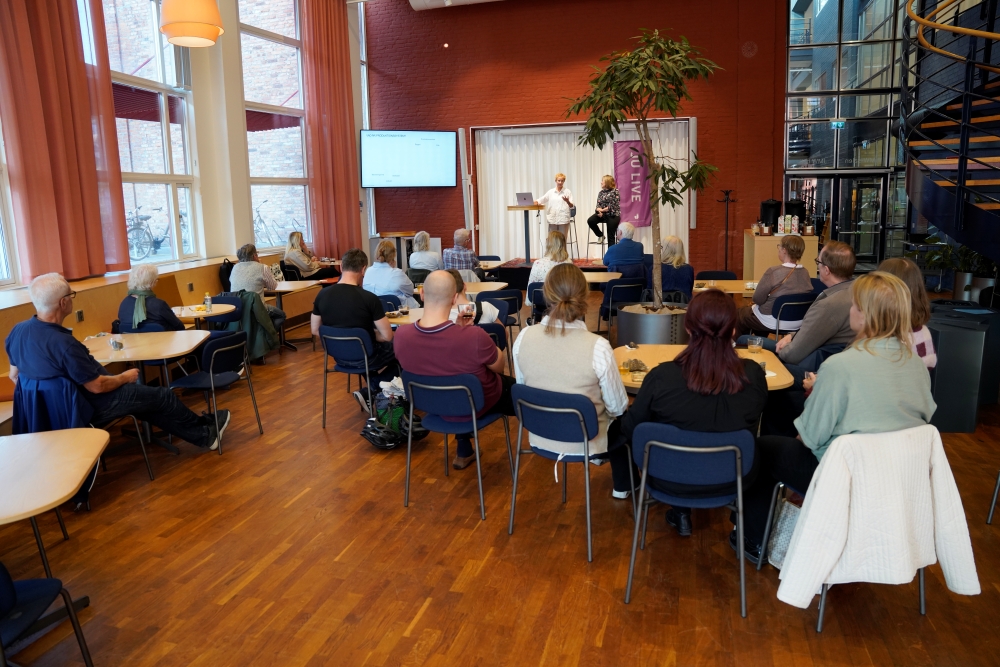
JU LIVE attracted around 30 attendees to the JMW Hall at the University Library on 1 October.
The fire destroyed Polarbröd's bakery in Älvsbyn in northern Sweden. The company then faced a dual challenge: rebuilding the bakery and shaping the future of its production while continuing to supply customers. Kristina Säfsten was one of several researchers who followed the reconstruction process through the research project RaSP – Resilient and Sustainable Production Development, which among other things aimed to identify smart ways to make Polarbröd's production more efficient, sustainable, and flexible.
"They needed to think differently"
"After the fire, they quickly realised that they needed to think differently in order to secure the company's future. They could no longer rely on a single production facility and therefore began producing their best-selling bread products at their second bakery in Bredbyn, in the municipality of Örnsköldsvik. Within a short period, they invested approximately SEK 83 million in that facility to increase capacity through improved technology and automation," says Kristina Säfsten.
Polarbröd's management was keen on to involving employees in the initiative and ensuring their engagement throughout the process, while also ensuring that new developments took place alongside ongoing production.
The Importance of Production in Sweden
In the early 2000s, it was common for Swedish companies to move their manufacturing operations to China, a development that Kristina Säfsten, as a production engineering researcher, questioned.
"However, the trend began to reverse gradually in the 2010s, and several companies started bringing their production back to Sweden, she says. Today, there is a broad understanding that expertise in production development cannot simply be outsourced," she says.
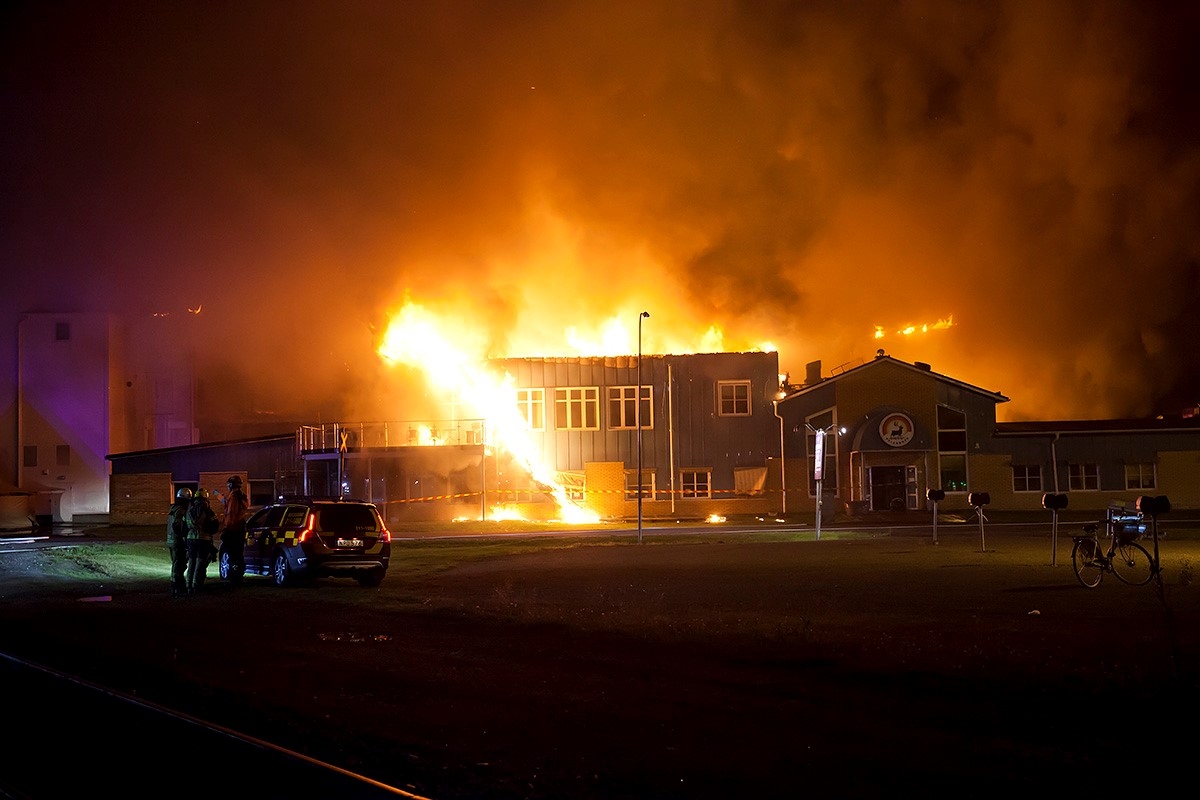
Polarbröd's bakery in Älvsbyn was completely destroyed in the 2020 fire. Photo: Krister Palm
The Royal Swedish Academy of Engineering Sciences (IVA) and the industry organisation Teknikföretagen emphasise in two recently published reports the importance of maintaining and further developing advanced manufacturing in Sweden.
"Manufacturing accounts for 25 percent of all jobs in Småland, and we have many outstanding companies in our region. Given the ongoing conflicts and supply chain disruptions around the world, we need to strengthen our manufacturing expertise even further," says Kristina Säfsten.
Joining her on stage was Kerstin Johansen, Professor and Associate Dean of Research at the School of Engineering, who also participated in the Polarbröd research project.
"From Accident to Success"
Among the approximately 30 audience members was Marita Hermansson from Jönköping, a first-time visitor to JU LIVE.
"I try to attend events that spark my curiosity, and that is what attracted me to JU LIVE. It was fascinating to hear how an organisation can turn a crisis into success, and I will definitely come back for future lectures," says Marita.
The topic of the event was not entirely unfamiliar to her, however.
"My husband is an engineer, and my son is an engineer at Husqvarna, so I already had some knowledge of the field. But it was exciting to learn more about production systems, and the lecture was highly engaging," she says.
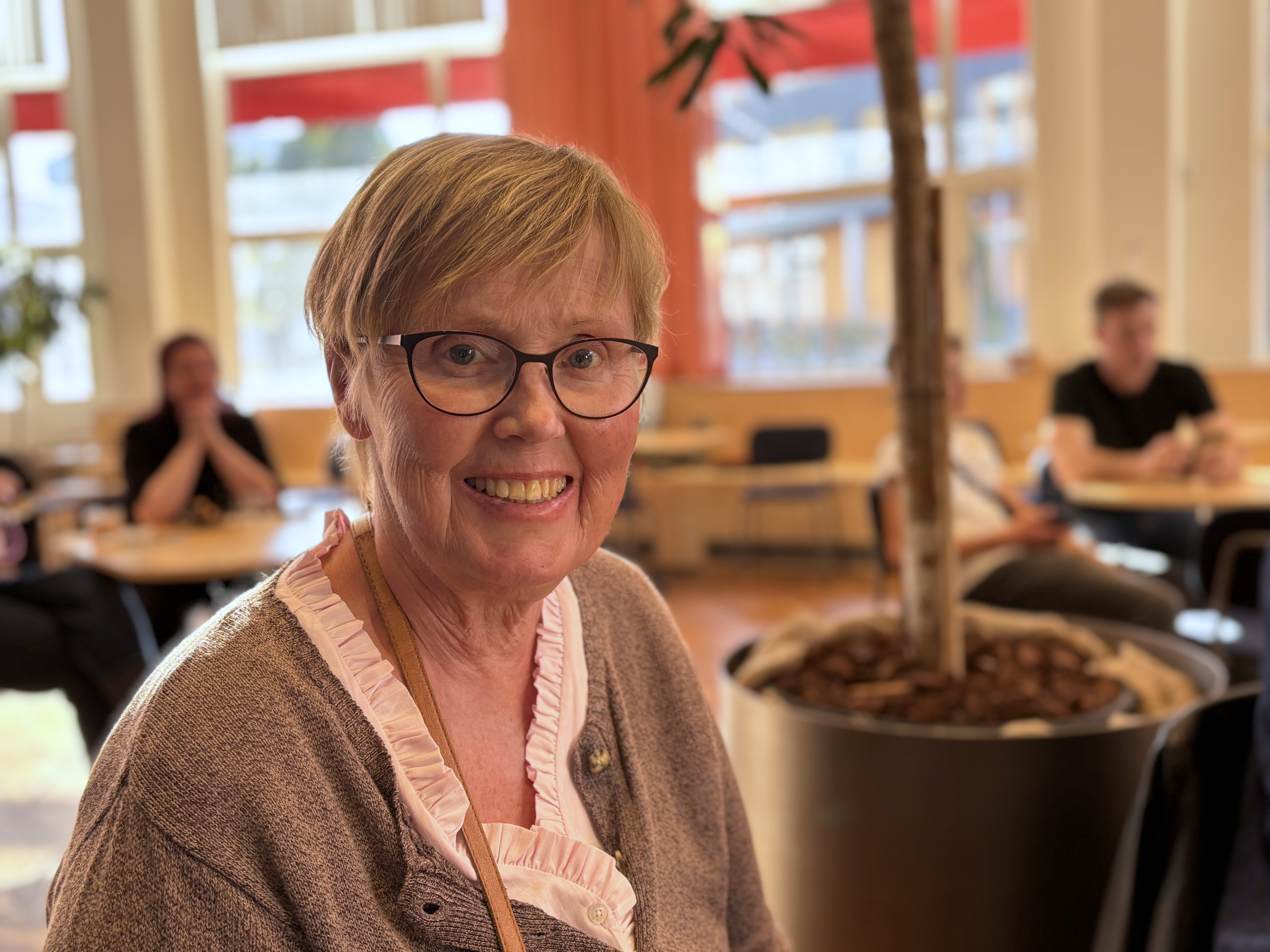
Marita Hermansson attended JU LIVE for the first time and says she will gladly return.
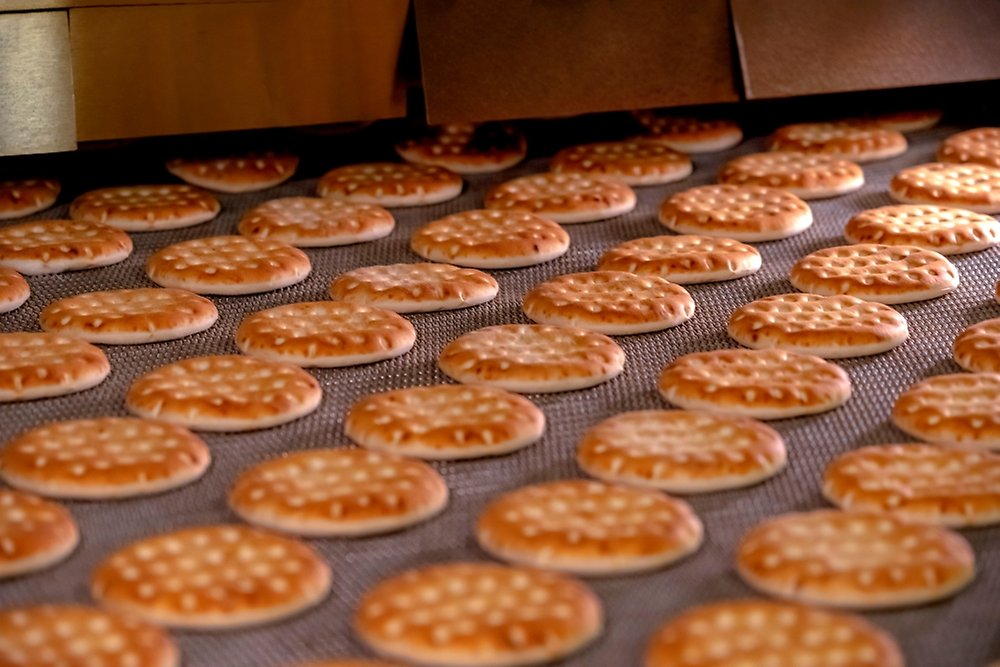
Foto branden: Krister Palm


