
Photo: Freepik
Digital tools in home help services are to become more user-friendly
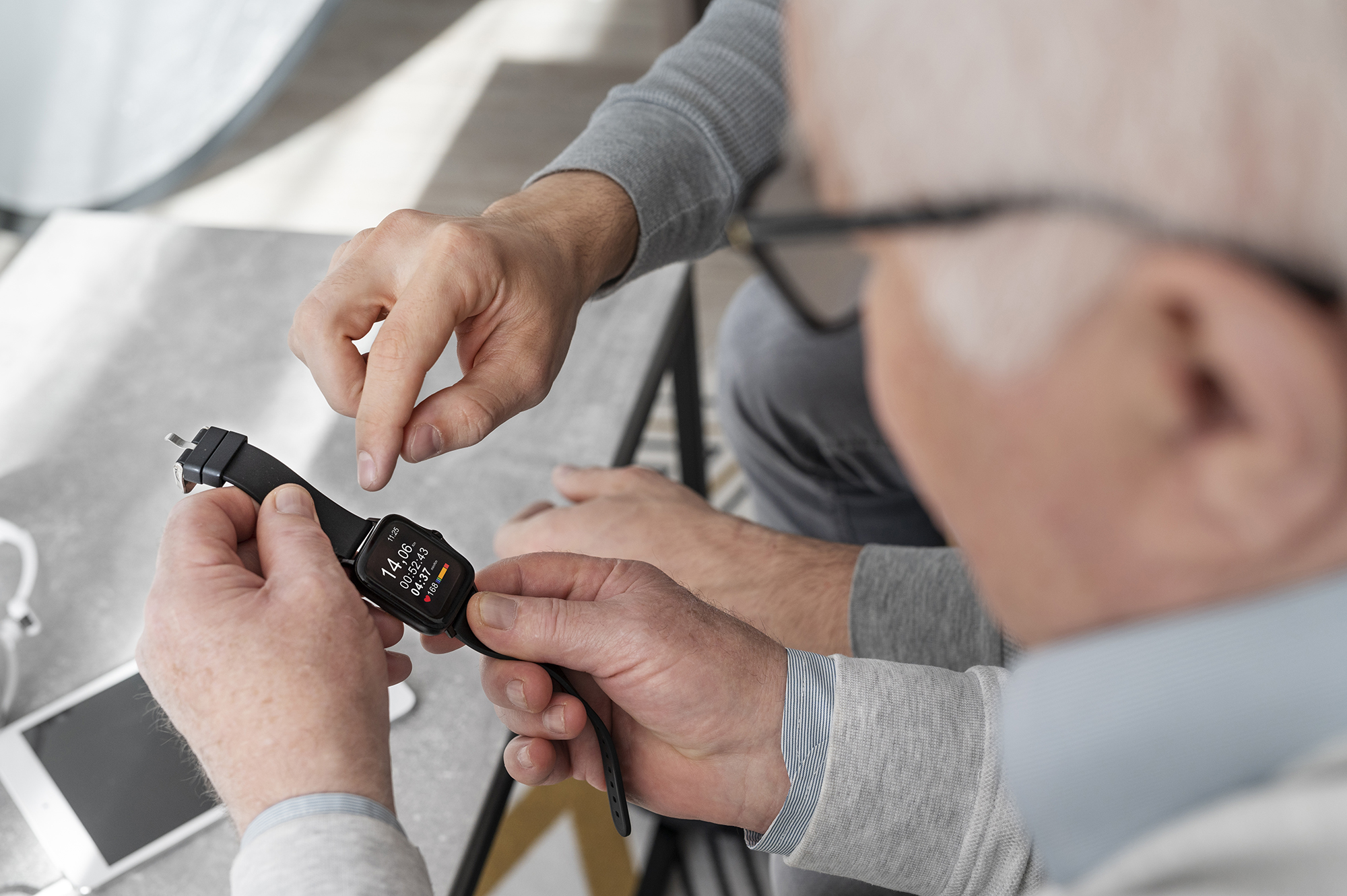
Digital tools such as safety alarms, sensors, and digital supervision are becoming increasingly common in home help services to enhance the safety and independence of older people. At the same time, the experience of care providers and previous studies show that the technology does not always function optimally in everyday life—neither for the elderly nor the home help staff. Therefore, more suitable solutions are now being developed and tested within the Welfare@home project at Jönköping University (JU).
Despite the growing use of digital tools in home help, the technology is often developed and implemented without sufficient consideration of how it is actually used in everyday situations. This can lead to solutions that are difficult to adapt, have limited functionality, or do not fit into the working methods of home help staff.
The research project has been granted SEK 2.4 million from the Kamprad Family Foundation and builds on previous studies. By taking a comprehensive approach to the development, implementation, and evaluation of welfare technology, the project can now be explored in greater depth.
“The project is important because older people and home help staff want practical and recognisable solutions, not just new technology,” says Sofi Fristedt, Associate Professor at the School of Health and Welfare at JU.
Three interconnected tracks
The project is divided into three interconnected tracks. The first focuses on developing more adaptable and user-friendly technology. New concepts, prototypes, and products are being developed in collaboration with older people, home help staff, Science Park, industry partners, as well as students and researchers. The goal is to create solutions that are both simple and flexible.
The second track concerns the implementation of the technology. Here, person-centered guidelines and training materials are developed in close collaboration with home help staff and older people. The work also includes how safety, independence, activity, and participation can be monitored and followed up.
In the third track, both the technology and the guidelines are tested and evaluated in practice. Through collaboration with municipalities in Jönköping County, via Kommunal Utveckling Jönköping, the solutions are tested in real-world environments. The experiences will be used to build knowledge about how digital tools can be implemented and developed in the long term.
“We look forward to creating solutions that are both understandable and usable in everyday life together with older people, staff, students, and companies,” says Sofi Fristedt.
Research team: Sofi Fristedt, principal investigator, Ulli Samuelsson, co-researcher at School of Education and Communication at JU, Steven Schmidt and Samantha Svärdh, co-researcher at Lund University and Giana Carli Lorenzini Technical University of Denmark, DTU.
Read more about the project: Welfare@Home - Challenges with welfare technology for older social service recipients and their home care service staff


