
Satellite data can improve monitoring of water levels and crops
How can satellite data be used to predict water levels, identify crops, and measure swimming water temperatures? Researchers at Jönköping University (JU), together with public authorities and businesses, are investigating this to develop solutions to real-world societal challenges.
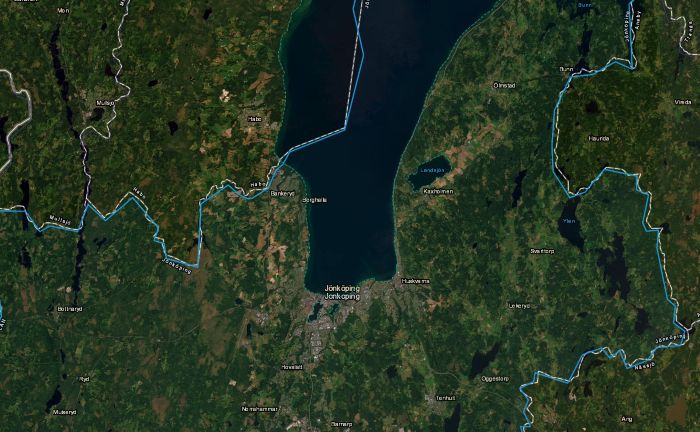
In the STAR-J project, funded by the Swedish National Space Agency, researchers are investigating how satellite data can be used to meet various societal needs. A first prototype has now been developed, demonstrating how satellite data can be applied to areas such as water level monitoring, agriculture, and bathing water temperatures.
In the STAR-J project, funded by the Swedish National Space Agency, researchers are exploring how satellite data can be used to meet various societal needs. The aim is to create a network of local partners and identify areas where satellite data can be valuable for municipalities, government agencies, and industry. A first prototype has now been developed and is being used to show how satellite data can be applied to areas such as water level monitoring, agriculture, and swimming water temperatures.
The prototype combines information from satellites with data from local sensors, such as measuring equipment installed in lakes. The information is then processed using algorithms that incorporate AI and machine learning.
“We can already see the potential of combining satellite data with local sensors and other information sources. This opens up new opportunities to address important societal challenges in a more efficient and data-driven way,” says Bilal Zafar, Assistant Professor of Computer Science at the School of Engineering at JU and project leader.
Predicting Changes in Water Levels
Together with Jönköping Energi, the researchers are working to predict how water levels in lakes around Jönköping change as snow melts. By combining satellite data with historical measurements from local sensors, they are training models to provide more accurate forecasts of future water level changes.
For the energy company, this knowledge is valuable because water levels affect production at the region’s hydropower plants.
“Better forecasts of water levels in lakes and watercourses where hydropower is generated can help us plan our electricity production more efficiently and make decisions earlier. We see clear potential in the benefits that this type of predictive analysis can bring to our operations,” says Kristoffer Pettersson, Data Scientist at Jönköping Energi.
Identifying Crops with More Than 80 Percent Accuracy
Another application has been developed on behalf of the Swedish Board of Agriculture. In this case, satellite imagery and machine learning are used to identify and classify crops grown on farmland. The aim is to facilitate the administration of agricultural subsidies by identifying discrepancies in the crops grown on different fields.
Initial comparisons with data from the Swedish Board of Agriculture showed that the model achieved an accuracy rate of over 80 percent across Sweden, from Skåne to the far north.
Measuring Lake Temperatures
The researchers are also collaborating with Destination Jönköping to measure water temperatures in lakes around Jönköping. The information can be valuable for both residents and visitors who want to plan swimming and other outdoor activities. Data is currently available for lakes including Munksjön, Rocksjön, and Landsjön, and the goal is to add other popular swimming lakes in the future.
The project is funded by the Swedish National Space Agency with approximately SEK 500,000. The next step is to further develop the three application areas, expand the network with additional partners, and complete a project report. The ambition is to apply for continued funding in 2027.
Project team at the School of Engineering, Jönköping University: Bilal Zafar, Assistant Professor of Computer Science; Jérôme Landré, Assistant Professor of Computer Science, Neziha Akalin, Assistant Professor of Computer Science and Andreas Axelsson, Senior Lecturer in Embedded Systems.
The project team also includes the newly graduated software engineering students Yahia Alali from Jönköping Energi and Emil Kronholm from Knowit.


