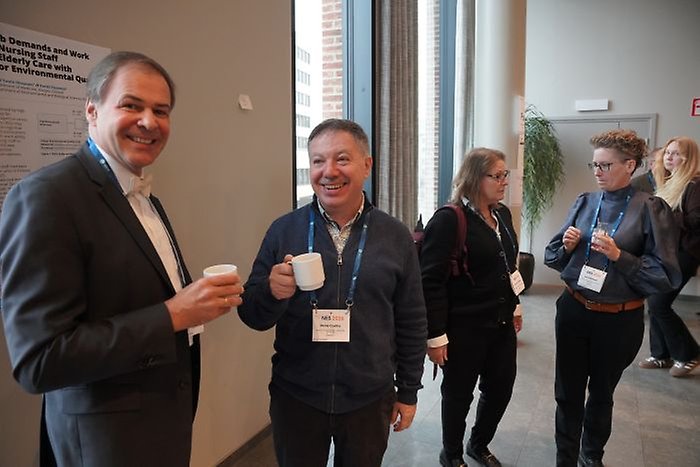
Future work environments in focus at international conference
How can we create safer, more sustainable and human-centred workplaces? This was one of the key questions when researchers, public authorities and companies from across the Nordic region and Europe gathered in Jönköping on 21–23 October for this year’s NES Conference.
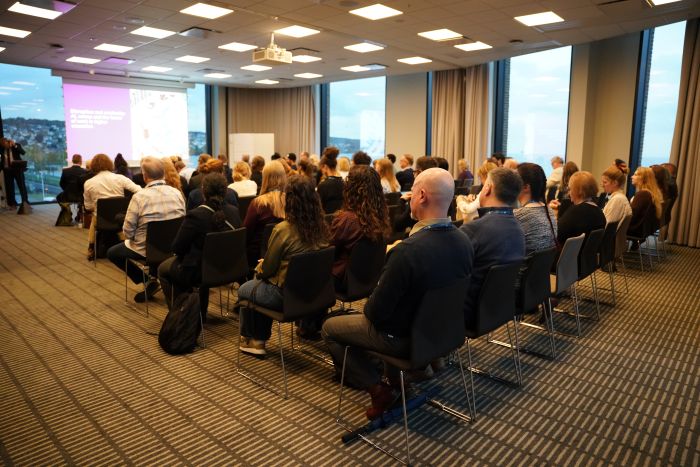
The School of Engineering at Jönköping University hosted the 53rd edition of the NES Conference, organized by the Nordic Ergonomics and Human Factors Society. More than 100 participants from around ten countries gathered at Quality Hotel Match in Jönköping, including participants from Sweden, Norway, Denmark, Germany, France and Portugal.
The conference is arranged by a Nordic scientific association that has promoted research and knowledge exchange in ergonomics and work environment since 1969. The annual conference provides a meeting place where researchers and professionals can share experiences, research findings and solutions for developing the work environments of the future.
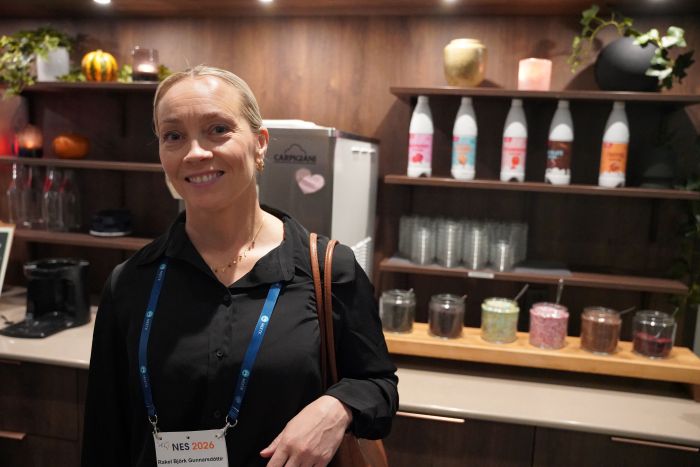
Rakel Björk Gunnarsdóttir, from Iceland.
One of the participants at this year’s conference was Rakel Björk Gunnarsdóttir from Iceland. It was her first time attending the conference, and she was looking forward to three rewarding days of lectures and workshops.
“I am an occupational therapist and also work with ergonomics, so many of the topics at the conference are closely related to my own work. As a member of the NES committee, I have also been involved in the organization of this conference. I am here to learn and take new knowledge home with me. The morning sessions on AI have already given me many interesting perspectives,” she says.
Focus on sustainable and safe work systems
During the conference, participants took part in research presentations, workshops and discussions on how workplaces and technical systems can be designed to better meet people’s needs. The field covers everything from ergonomics and work organization to safety, digitalisation and human-technology interaction.
This year’s keynote speakers included Måns Svensson, President of Jönköping University, and Annika Engström, Professor of Work Organization at the School of Engineering. They offered perspectives on how research and collaboration can promote sustainable working life and contribute to the development of the organizations of the future. Thomas Alexander, Vice President of the International Ergonomics Association, spoke about the future of ergonomics in a time of rapid technological development.

Denis Coelho, Assistant Professor at the School of Engineering and President of NES, was one of the local organizers together with Lisa Bäckvall, also an Assistant Professor at the School of Engineering.
Denis Coelho, Assistant Professor at the School of Engineering and President of NES, was one of the local organizers together with Lisa Bäckvall, also an Assistant Professor at the School of Engineering.
Denis believes that the conference plays an important role in the Nordic ergonomics community.
“We are facing a change in the organization starting from January 2027, so this will be the final conference in its current form. We are also very pleased with the high scientific quality and with bringing together participants from both the Nordic countries and other parts of Europe. We even have participants who have travelled all the way here from Canada,” he says.
More pictures from the conference: