
What protects against violent Islamist radicalisation?
Family, education, hope for the future and a strong religious grounding can help people resist the influence of violent extremism. This is the finding of a new study from Jönköping University (JU), which examined why people who had been exposed to extremist influence chose not to join jihadist groups in various conflict zones.
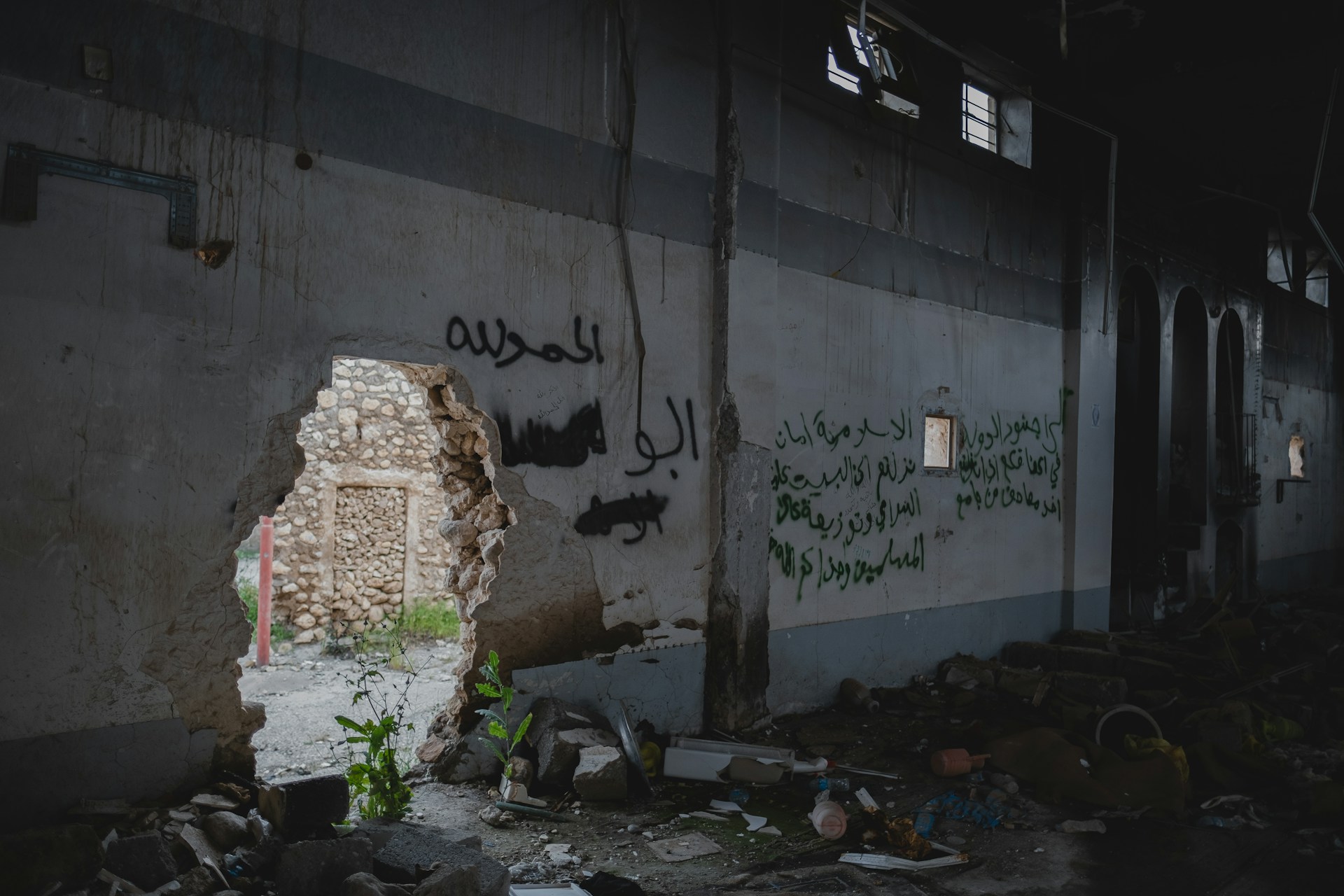
Stock photo. A mosque in Shingal, Iraq, reduced to ruins by the war with the Islamic State. Photo: Levi Meir Clancy on Unsplash
In the study, Marco Nilsson, Professor of Global Studies at the School of Education and Communication at Jönköping University, interviewed 22 people in Gothenburg. All had been exposed to jihadist propaganda or recruitment attempts but had chosen not to join jihadist groups in various conflict zones.
Previous research has primarily focused on people who have become radicalised. This study instead turns its attention to those who resisted such influence. By examining their experiences, the report identifies factors that appear to strengthen resilience to extremist messages.
The findings show that resilience is rarely the result of a single factor. Family, friends, education and clear goals for the future often played an important role in helping participants resist extremist influence. People who already felt they had meaningful relationships and a sense of hope for the future were also less likely to be attracted by extremist groups’ promises of community, meaning and belonging.
Religious grounding is an important protective factor
Many of the participants also actively scrutinised the messages they encountered. They questioned recruiters’ arguments, considered the consequences of travelling to conflict zones and compared extremist messages with their own experiences, values and knowledge.
The study also shows that religion should not be understood as either an unequivocal risk factor or an unequivocal protective factor. Religious knowledge and a stable religious grounding could serve as important protective factors when they provided participants with alternative ways of understanding and interpreting their religion, making them less receptive to violent interpretations of Islam.
“Which religious interpretative frameworks and authorities an individual has access to, and how these are used to understand political conflicts and religious obligations, influence the role that religion plays and whether it can help counter radicalisation,” says Marco Nilsson.
Strengthening protective environments
The findings may contribute to the development of more targeted preventive measures, according to Marco Nilsson. Rather than focusing solely on risk factors, the study highlights the importance of strengthening protective environments and relationships, fostering hope for the future, and developing people’s ability to critically assess extremist messages.
“I hope that the study’s focus on how recruitment attempts have actually taken place, and why they have often failed, can provide knowledge that contributes to the development of new strategies to counter radicalisation. The findings may also prove relevant beyond violent Islamism and inspire research into resilience to other forms of radicalisation," says Marco Nilsson.
The report När rekryteringen misslyckas – Skyddsfaktorer mot våldsbejakande islamistisk radikalisering (When Recruitment Fails: Protective Factors against Violent Islamist Radicalisation) was commissioned by the Swedish Center for Preventing Violent Extremism (CVE). The project included an empirical study of how individuals demonstrated resilience when exposed to extremist influence. The study was conducted in 2026–2027 and focused on recruitment to violent Islamist groups in Sweden.


