
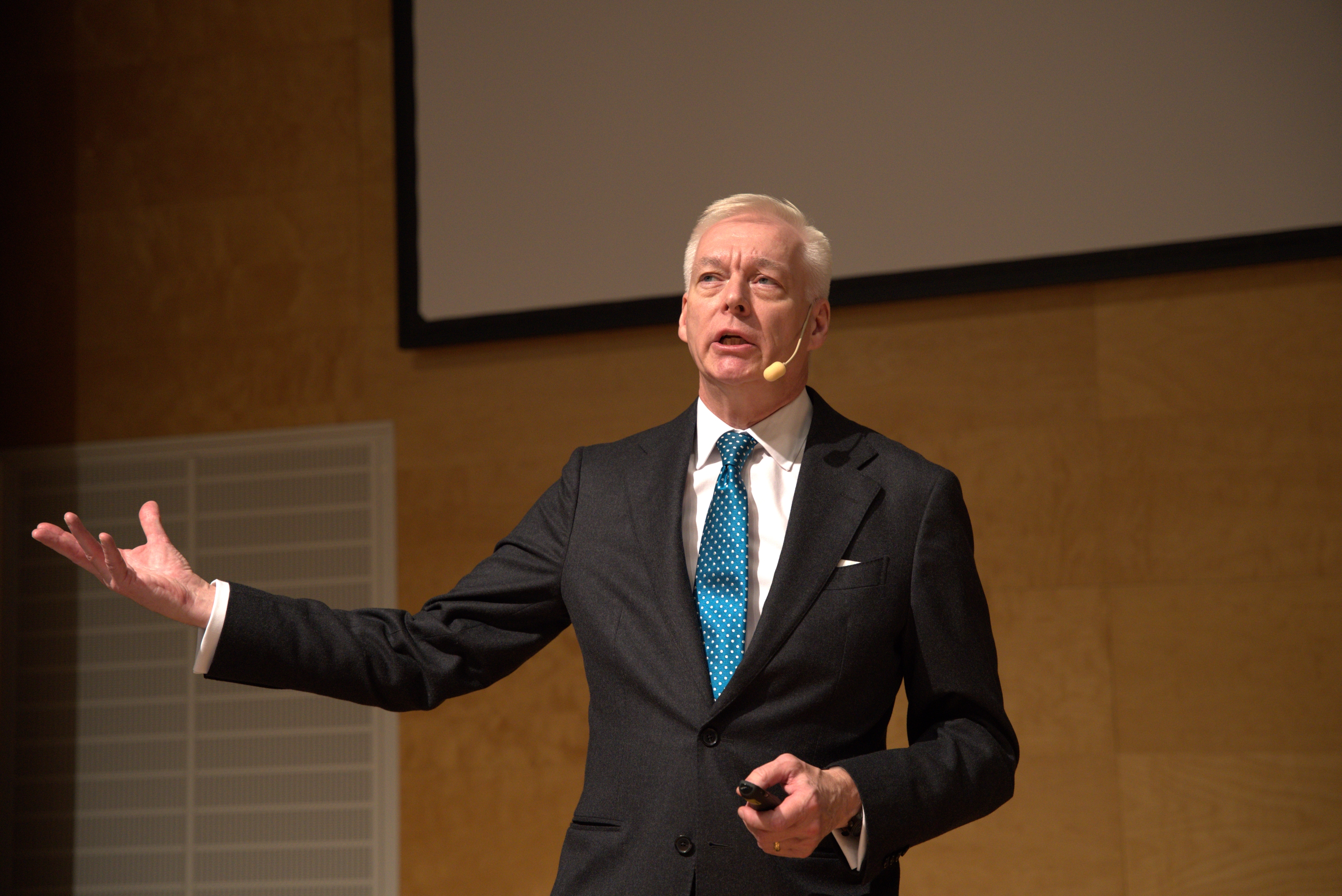
During his lecture, Joakim Paasikivi emphasised the importance of individual responsibility in building strong preparedness. He also believes that the two new security-focused programmes at the School of Learning and Communication are much-needed additions.
Paasikivi: "Great to meet people who want to make a difference"
The security situation and Swedish society’s preparedness were the focus of attention when Joakim Paasikivi, Lieutenant Colonel, senior geopolitical adviser and Honorary Doctor at Jönköping University, gave a public lecture at the School of Education and Communication.
“I’m rather tired of my own voice, but if I can help to generate greater interest in these issues, that’s brilliant,” says Joakim Paasikivi.
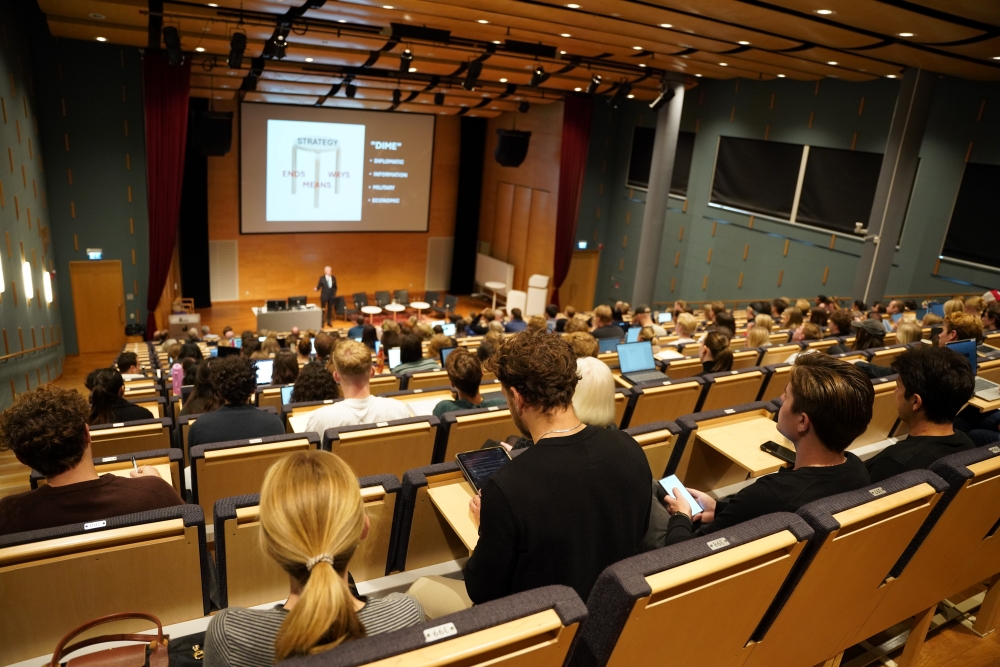
There was strong interest in the lecture, which was also open to the public.
The lecture formed part of the teaching on the new programmes ‘Society and Security’ (Bachelor’s) and ‘Conflict, Risk and International Security’ (Master’s) at the School of Education and Communication. Joakim Paasikivi emphasises that both programmes are welcome initiatives, as they are needed.
“Not a minute too late”
“It’s not a minute too late. The security situation is the worst it has been since the Second World War, and had we taken a greater interest in these issues earlier in Sweden, we might not be seeing such a significant rollback of total defence capabilities and civil preparedness as we are today.” Security, crisis preparedness and risk management will always be important issues, but they are particularly important right now, says Joakim Paasikivi.
He enjoys meeting people who are at the start of their studies and want to learn more about the world so they can make a difference.
Individual responsibility
One of Joakim Paasikivi’s most important messages concerned individual responsibility. He believed that strong preparedness is based not only on the authorities and defence capabilities, but also on people’s willingness to get involved and take responsibility.
“We must get better at working together. That also requires courage. Not necessarily physical courage, but the courage to change and improve.”
After the lecture, several students took the opportunity to speak to Joakim Paasikivi. One of them was Lorena Hoffmann from Brazil, who has recently started the Master’s programme in Conflict Risk and International Security at the School of Education and Communication. She previously studied international relations at the school of and she felt that the lecture gave her new perspectives on Europe’s security challenges.
A Nordic perspective
“As an international student, I found it very interesting to hear a Nordic and European perspective on developments in Russia and the war in Ukraine. It was also interesting to learn more about disinformation and information influence," says Lorena Hoffmann.
The day also featured Q&A sessions with the audience and a panel discussion on Russia’s actions and their implications for European and global security.
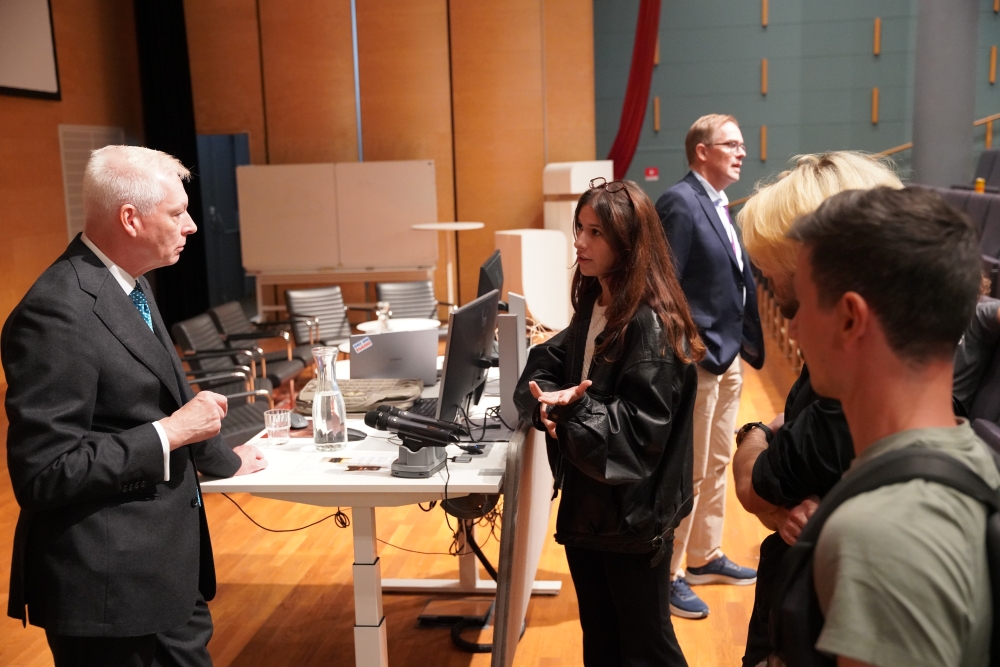
Master’s student Lorena Hoffmann from Brazil was among the attendees who spoke with Joakim Paasikivi after the lecture.
Marco Nilsson, Assistant Professor of Political Science is main responsible of both programmes, Society and Security (SOS) and the master's programme in Conflict, Risk and International Security at the School of Education and Communication.


